 Back to the Computer Zoo
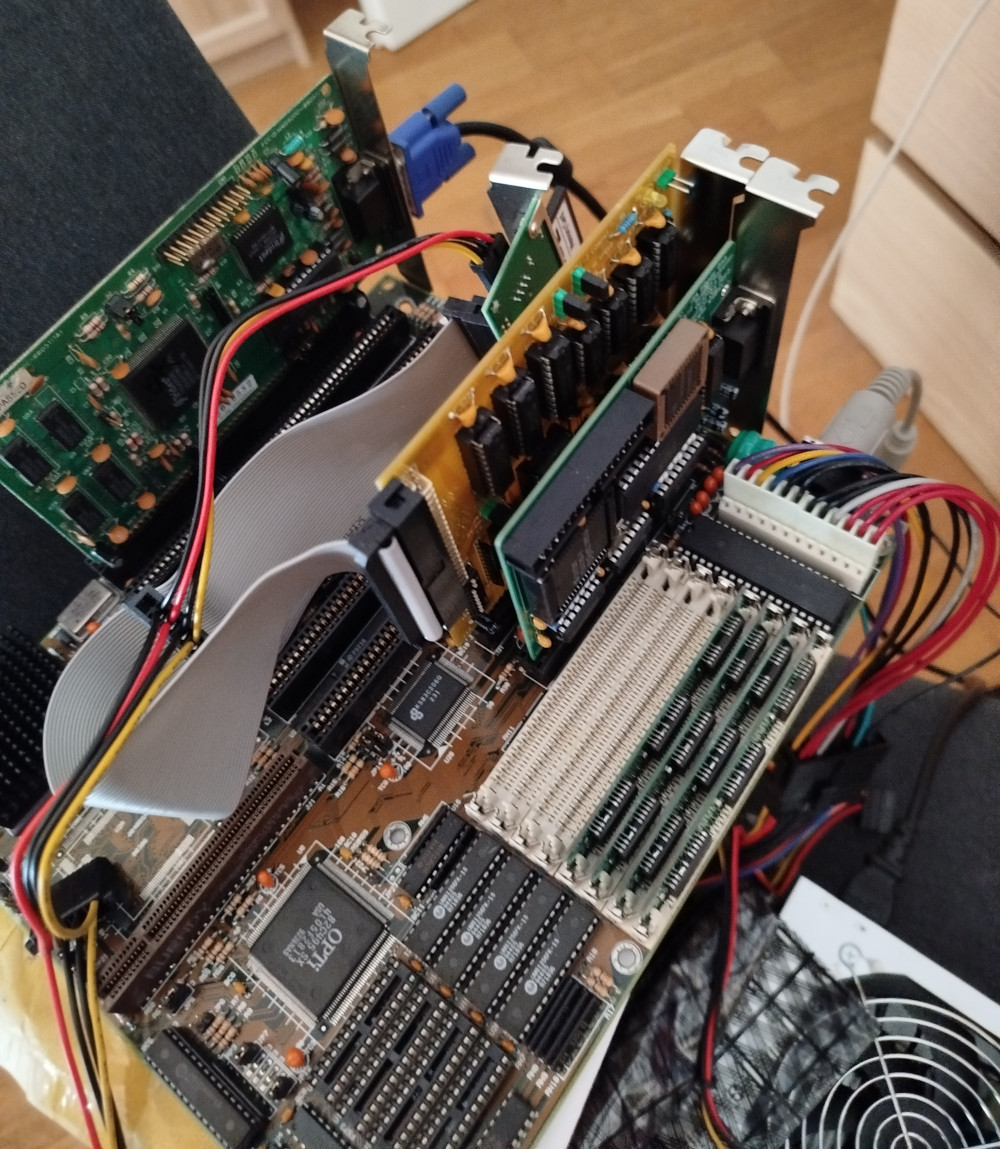
This is the first test I did, mainly to check step-by-step if the mainboard, CPU and RAM combo worked, then moved on to testing an IDE-to-CF a adapter and an old serial mouse.
The board is sitting on top of a cardboard box on a chair, the PSU that
can be seen was a purchase from the local PC store (I need your
cheapest ATX power supply please
). It cost €20 and has "2nd
revision" written on the box. Not very reassuring…
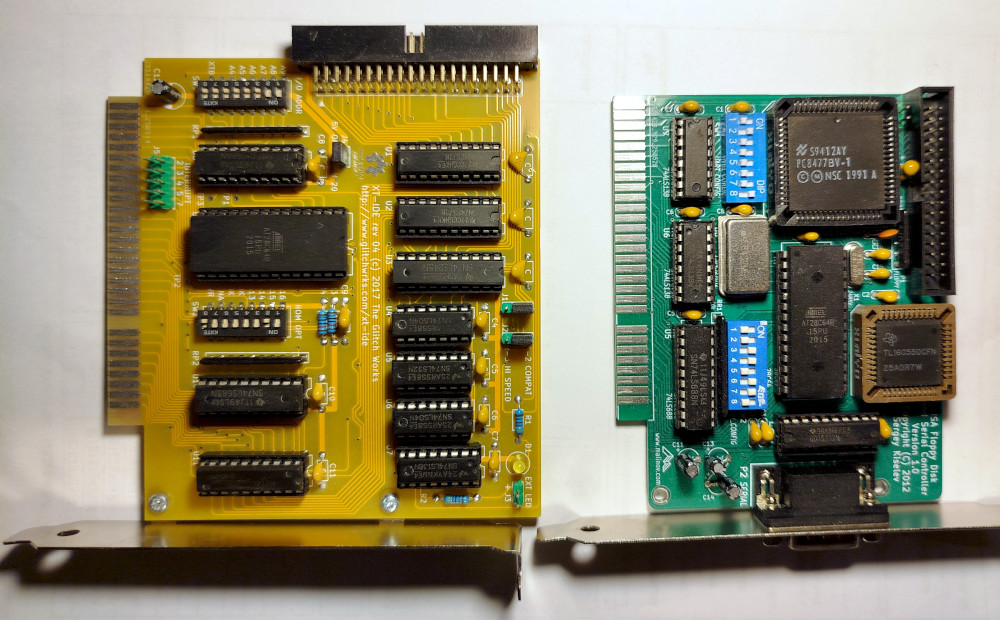
In the image of the test setup, a glitchworks XT-IDE card and Sergey Kiselev's 8 bit ISA floppy card can be seen, plugged into the two 8 bit ISA slots. I did not use them in the final build, only for testing before moving on to getting a standard super I/O to work with the same peripheral hardware.
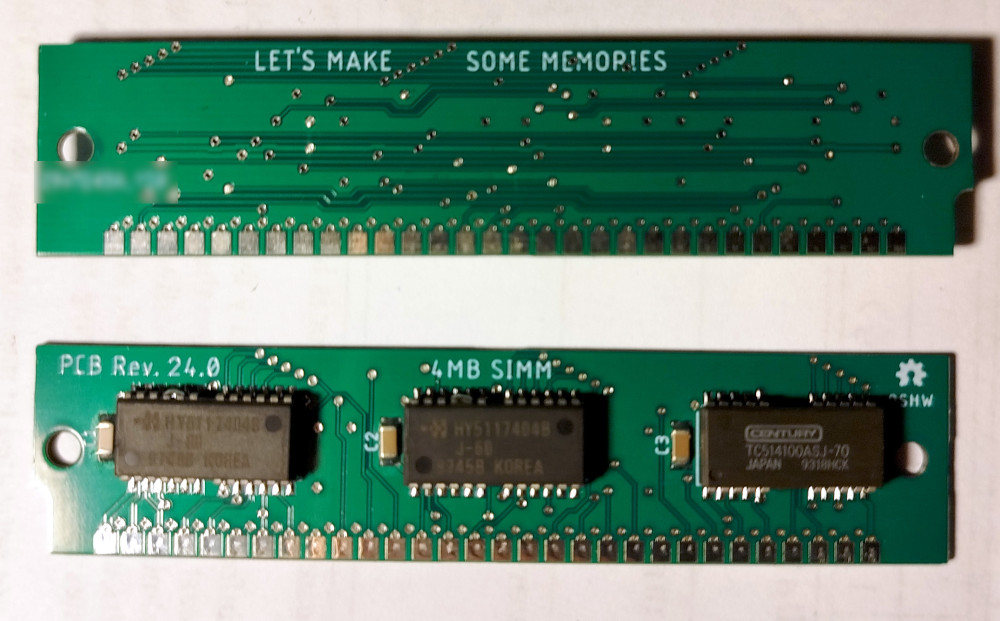
Before borrowing a box of RAM from the local hackerspace and picking some out that worked, I used another OSHW project: "Let's make some memories" , a reverse engineered 30 pin SIMM stick, orderered off JLC with some new-old-stock DRAM ICs soldered on.
I initially used some 1M sticks from the hackerspace box for testing, then replaced them with these, giving the machine 16M RAM. Later, I found some more 4M sticks in the RAM box and bumped the machine up to 32M, but unfortunately, one of the old sticks from the died (or at least the parity chip did, I might try replacing it with a spare if I knew which stick it was). So for now, those remain in the final build as the only RAM in the machine.
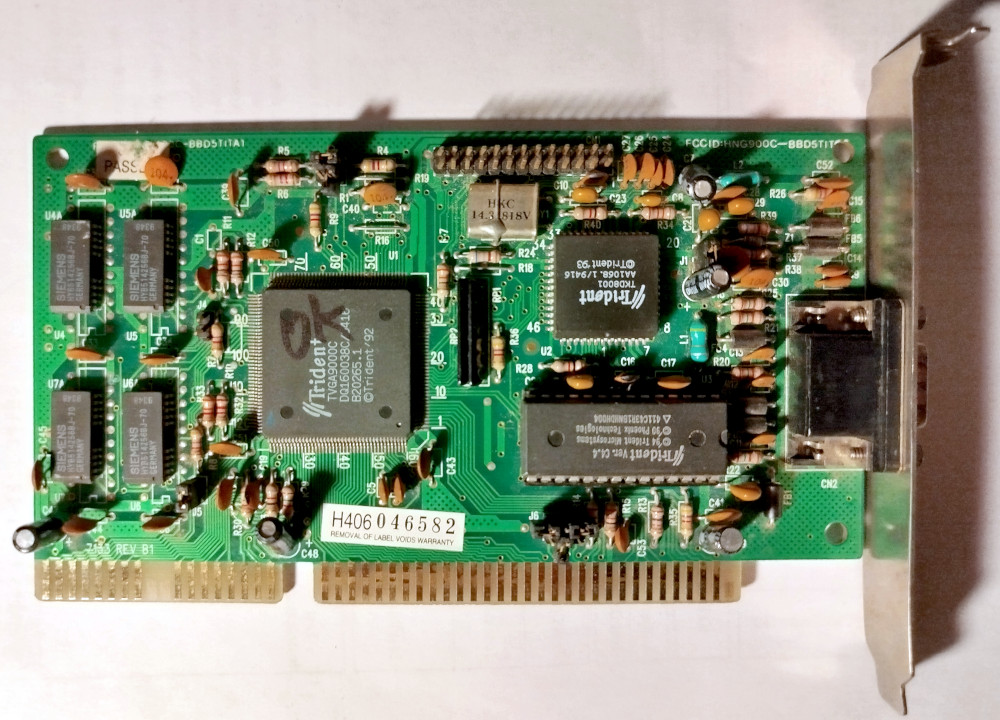
This is the graphics card, a 16 bit ISA card based on a Trident TVGA 9000C chip. It staid in the final build.
The only finicky thing about this card was that it can be jumpered to either work in 8 bit ISA mode or in full 16 bit ISA mode. When I first installed it, it was jumpered to 8 bit from wherever it was previously used. This apparently caused the BIOS some issues accessing the memory and VGA ROM on the card, the screen stayed black and it made some sad beeps.
 Back to top Back to top
|
| |
Back to the Computer
Zoo
|